


Table of content
You know that feeling when you're deep into a binge-watching session and a commercial break jolts you out of the story? What do you do?
If you're like 86% of viewers, you grab your phone. Or hit skip. Or straight-up leave the room to grab a snack.
And if you're a brand spending thousands on those CTV ads? That's your budget walking out the door.
Traditional commercial breaks on Connected TV are facing a crisis. Viewers have more control than ever, and they're actively avoiding interruptive advertising. But here's the thing: there's a smarter way to reach audiences that doesn't involve interrupting their favorite shows.
Enter virtual product placement.
The Problem With Traditional CTV Ads (And Why Viewers Are Over Them)
Let's get real about what's happening with traditional advertising on streaming platforms.

Commercial breaks interrupt the viewing experience. They pull viewers out of the narrative, break immersion, and: most importantly: give audiences a perfect excuse to do literally anything else. Studies show that viewers actively multitask during ad breaks, which means even if your ad plays, nobody's actually watching it.
The numbers don't lie. Traditional 30-second spots might reach eyeballs, but they're not creating engagement. Viewers have trained themselves to tune out the moment content stops and ads begin.
And it's getting worse. With ad-supported tiers becoming the norm across streaming platforms, viewers are experiencing ad fatigue at unprecedented levels. The more ads they see, the less they care.
But interruptive ads aren't the only reason traditional approaches are struggling. There's also the measurement problem. How do you prove an ad was actually viewed when 60% of viewers are scrolling Instagram during the commercial break?
You can't.
What Virtual Product Placement Actually Is (And Why It Changes Everything)
Virtual product placement: or VPP: isn't your grandpa's Coca-Cola can sitting on a table. We're talking about AI-powered, digitally integrated brand placements that are inserted into video content post-production.
Think of it this way: instead of stopping the show to tell you about a product, the product becomes part of the story itself.
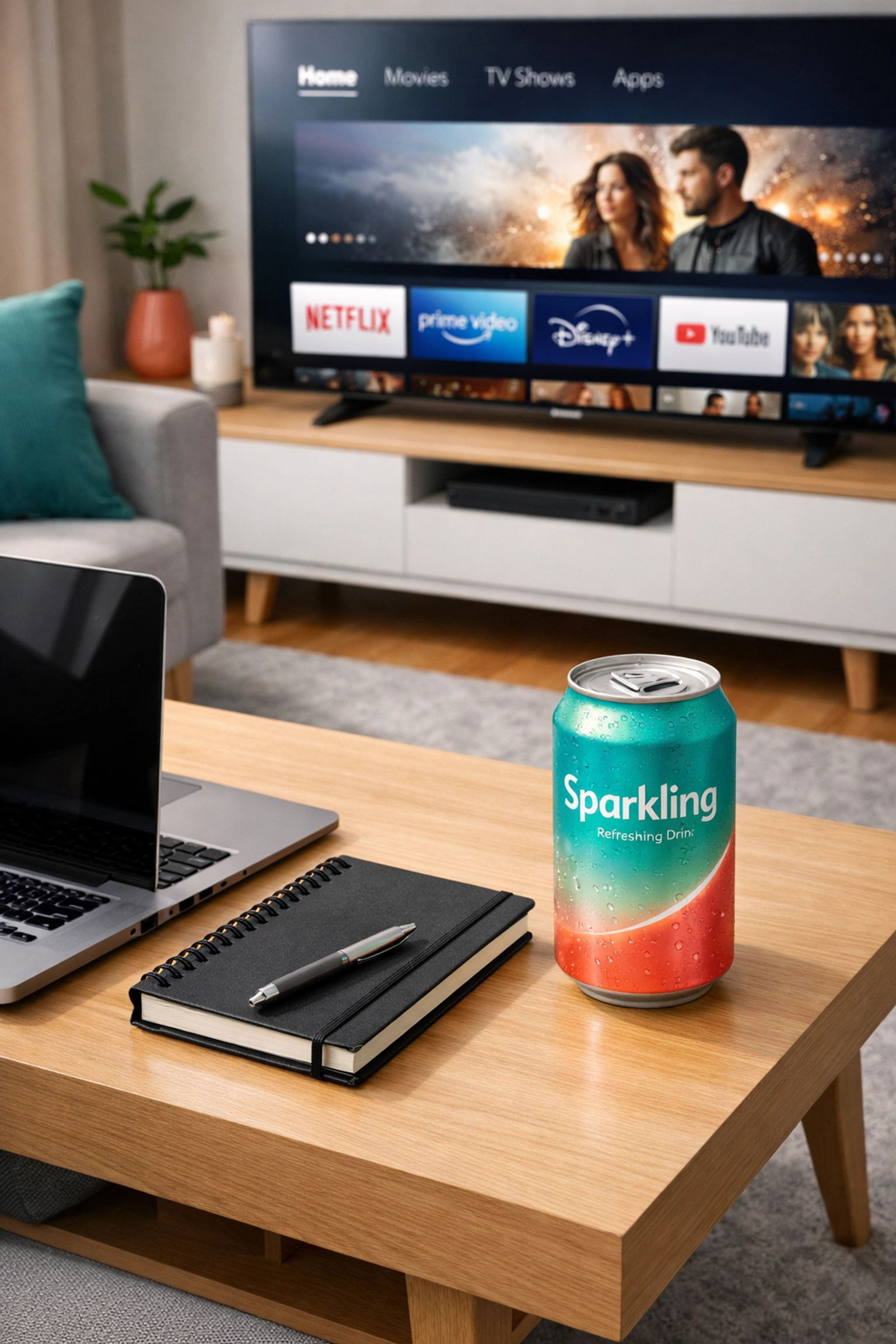
A character drinks a specific beverage. They drive a certain car. They use a recognizable tech brand. The placement feels natural because it is natural: woven into the fabric of the content rather than slapped on top of it.
This is non-interruptive advertising at its finest. Viewers don't skip it because there's nothing to skip. They don't mute it because the audio isn't interrupted. They just... watch it.
And thanks to AI product placement technology, brands can now insert these placements into existing content without reshooting scenes or disrupting production. That's where companies like Rembrand come in: using AI to seamlessly integrate products into scenes in ways that feel authentic and contextually relevant.
The best part? These placements can be dynamic. Different audiences can see different products in the same scene, allowing for hyper-targeted campaigns without creating multiple versions of content.
The Numbers Don't Lie: Why VPP Crushes Traditional Ads in Engagement
Ready for some stats that'll make you rethink your entire CTV strategy?
Virtual product placement delivers a 98.5% completion rate. Let that sink in. When's the last time a traditional commercial came anywhere close to that?
It gets better. VPP also offers 100% viewability. Since the placement is embedded in the content viewers chose to watch, you're guaranteed they see it. No "maybe they were in the room" guesswork. No "possibly they glanced at the screen" hopes.
Research shows that audiences experience significantly higher unaided brand recall from product placements compared to traditional ads. When viewers engage with a brand as part of a story, they remember it. When they sit through a commercial break? That memory gets foggy fast.

Native integration: the kind VPP delivers: achieves approximately 20% higher engagement rates than interruptive advertising. Why? Because viewers aren't being sold to. They're being immersed in a narrative where brands exist naturally.
Here's where it gets really interesting: studies accounting for real-world viewing behavior (you know, where people multitask and zone out during ads) reveal that product placements significantly outperform traditional commercials in actual recall.
Not tested recall. Not "in a controlled environment" recall. Real recall.
But Wait: Don't Traditional Ads Still Have Their Place?
Look, we're not here to tell you that traditional CTV advertising is completely dead. That would be dishonest.
Traditional 30-second spots still excel at grabbing initial viewer attention. They're bold, they're loud, and when executed well, they can create memorable moments. In controlled experimental settings, they can be effective.
The reality is, traditional ads work best when they're not working alone.
Research shows that combining both virtual product placement and traditional ads generates a 53% sales lift compared to only 13.5% from traditional ads alone. That's not a small difference: that's a complete transformation in campaign performance.
Think of traditional ads as your attention-grabber and VPP as your retention tool. One gets viewers interested; the other keeps them engaged without triggering ad avoidance behaviors.
The Winning CTV Strategy: It's Not Either/Or
Here's the message smart advertisers are figuring out: you don't have to choose between virtual product placement and traditional ads. You should be doing both.

The most effective CTV strategy layers in-show product placements with complementary traditional advertising. Early-in-show placements with story-integrated products maximize brand recall, while traditional spots amplify overall campaign impact during natural content breaks.
Running in-scene advertising alongside traditional 30-second ads drives stronger outcomes across sales, website visits, and brand awareness than either approach alone. The data is clear on this.
But here's the key: prioritize product placements as your primary strategy. Make VPP the foundation of your CTV approach, then use traditional ads to reinforce messaging and capture audiences during high-attention moments.
Why this order? Because product placement advertising bypasses the biggest challenges facing traditional ads: ad avoidance, multitasking, and viewer fatigue. You're building on a foundation that actually gets watched.
How AI Makes Virtual Product Placement Scalable (Finally)
For years, product placement was limited to big-budget productions with deep brand partnerships. If you wanted your product in a show, you needed to be there during filming.
Not anymore.
AI-powered platforms like Rembrand are democratizing access to virtual product placement by making it possible to insert brands into existing video content post-production. No reshoots. No production delays. Just smart, contextual integration that feels native to the content.
The technology analyzes video content to understand context, scene composition, and narrative flow. Then it identifies natural placement opportunities and integrates products in ways that match the lighting, perspective, and visual style of each scene.
This isn't slapping a logo on a wall. This is sophisticated rendering that makes products look like they were always there.
The flexibility is game-changing. Brands can test different products in different scenes, optimize placements based on performance data, and adapt campaigns to changing budgets: all without touching the original content production.
The Verdict: Virtual Wins, But Combination Conquers
So which is better for your CTV strategy: virtual product placement or traditional ads?
If we're being honest? Virtual product placement delivers superior performance on every metric that matters: completion rates, viewability, recall, and engagement. It solves the ad avoidance problem, eliminates skipping, and creates genuine brand exposure without interrupting the viewer experience.
But the smartest brands aren't choosing one over the other. They're combining both methods to maximize impact.

Use VPP as your primary weapon. Build campaigns around non-interruptive, story-integrated placements that audiences actually watch. Then layer in strategic traditional ads to amplify reach and drive home key messages during high-attention moments.
That combination? That's how you achieve 53% sales lift instead of settling for 13.5%.
The era of interruption-only advertising is ending. Viewers have made it clear they want content, not commercials. The brands winning in CTV are the ones giving audiences what they want while still delivering measurable business results.
Virtual product placement isn't the future of advertising. It's the present. And if you're still relying solely on traditional commercial breaks, you're not just behind the curve: you're actively ignoring what the data is screaming at you.
Time to build a CTV strategy that actually works. Your completion rates (and your CFO) will thank you.
.svg)


